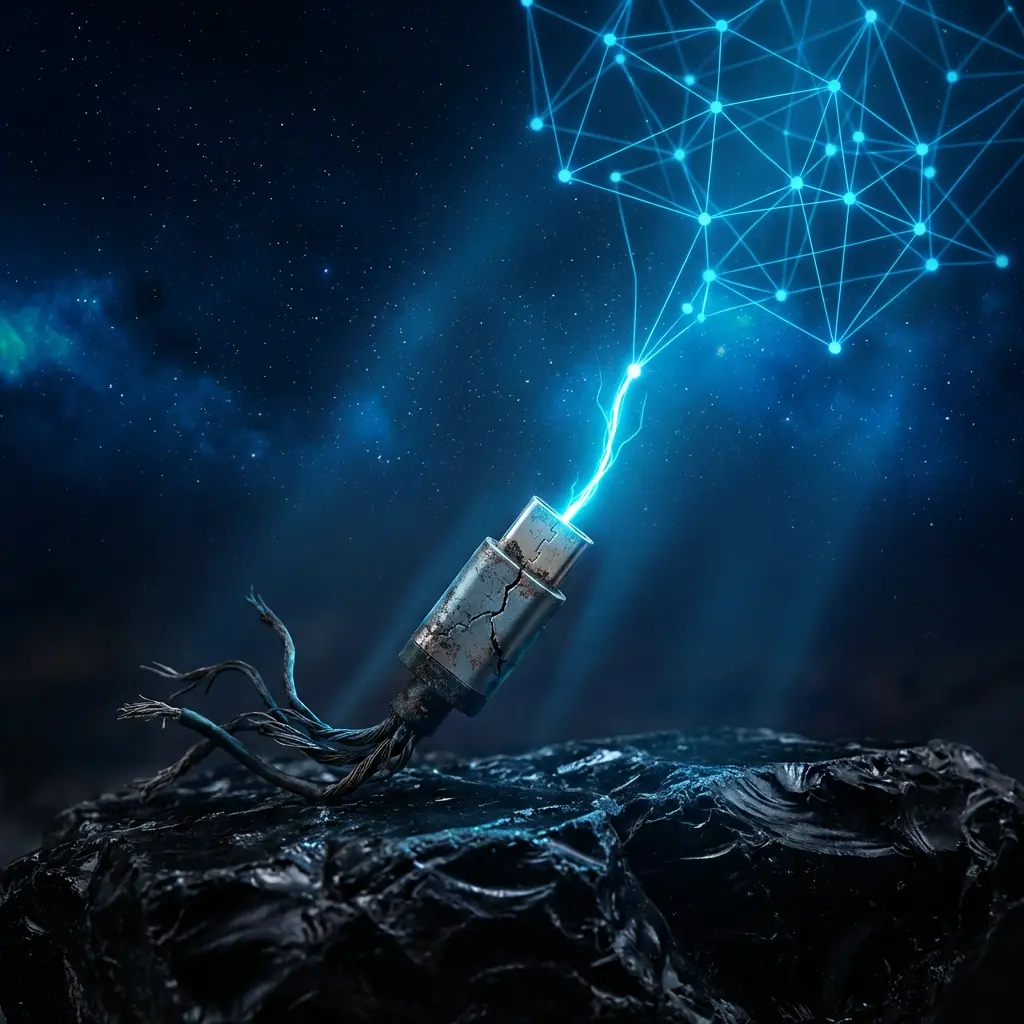
In the fast-moving world of AI protocols, eighteen months is a lifetime. The Model Context Protocol — MCP — has lived at least two of them. Created by Anthropic, hyped as the universal standard for connecting AI to the outside world, then left for dead by some of the loudest voices in tech, MCP appeared to be another casualty of the AI hype cycle. Then, on March 27, 2026, a single tweet from an unlikely source changed the conversation entirely.
A protocol born from copy-paste frustration
MCP’s origin story is remarkably humble. In mid-2024, Anthropic engineer David Soria Parra was building internal developer tools and grew frustrated with a specific workflow: he kept copying context back and forth between Claude Desktop and his IDE. Together with colleague Justin Spahr-Summers, he identified a deeper structural problem. Connecting AI models to external tools and data sources required building custom integrations for every combination — M models times N tools, each with its own proprietary approach. OpenAI had GPT Actions. Anthropic had its own tool-calling format. Every new data source meant another bespoke connector.
Their solution was an open protocol modeled on Microsoft’s Language Server Protocol: a standardized way for any AI application to discover and use any compatible server’s capabilities. The pitch was simple — “USB-C for AI.” One connector, many devices. The protocol used JSON-RPC 2.0, defined three core primitives (tools, resources, and prompts), and launched as open source on November 25, 2024, with SDKs for Python and TypeScript.
The honeymoon that wasn’t
The initial reception was tepid. Most engineering teams dismissed it as yet another standard destined to die in committee. The technical limitations were real: MCP’s initial transport was STDIO-only, meaning servers could only run locally. There was no built-in authentication. Security researchers eventually found thousands of misconfigured servers exposed publicly. Token overhead was a serious practical concern — research showed MCP could inflate input-token budgets by up to 236x, with some teams burning nearly three-quarters of their token allocation just on tool definitions.
Critics asked a fair question: why was MCP needed at all when REST APIs already worked perfectly well?
A brief, misleading peak
MCP got its biggest boost in March 2025, when OpenAI CEO Sam Altman announced support across OpenAI’s products. Google followed with Gemini support. Microsoft showcased MCP at Build 2025. For a few months, it looked like MCP had won the protocol wars before they even started.
But adoption was wide and shallow. Anthropic donated MCP to the Linux Foundation’s Agentic AI Foundation in December 2025, framing it as a milestone. In practice, it looked more like Anthropic trying to offload a project that was losing momentum. The donation attracted platinum members and press releases, but it didn’t solve MCP’s fundamental problems: it was verbose, expensive in tokens, and frequently overkill for use cases where a simple API call would suffice.
The death spiral
By early 2026, the backlash was no longer a murmur — it was a chorus. Developer Eric Holmes published “MCP is dead. Long live the CLI” and hit the front page of Hacker News. Y Combinator President Garry Tan declared publicly that “MCP sucks honestly.” Perplexity CTO Denis Yarats announced his company was abandoning MCP entirely in favor of direct APIs and command-line tools. Thoughtworks placed “naive API-to-MCP conversion” in the Hold ring of its Technology Radar — a formal recommendation to stop adopting it.
The criticism was substantive, not just contrarian. MCP servers were being created carelessly — thin wrappers around APIs that added complexity without value. The ecosystem was flooded with low-quality implementations. The promise of “write once, connect everywhere” had collided with the reality that most connections still required significant custom work.
A viral Chinese-language article from Jiqizhixin crystallized the sentiment: “MCP Is Dead, Long Live CLI!” Analysis firms placed MCP squarely in the Trough of Disillusionment. The protocol that was supposed to unify AI’s connection to the world seemed to be fragmenting instead.
March 27, 2026: the tweet that changed everything
Then Peter Steinberger — the Austrian developer behind OpenClaw, the open-source autonomous AI agent with over 310,000 GitHub stars — posted a message that reframed the entire conversation:
“The next version of OpenClaw is also an MCP, you can use it instead of Anthropic’s message channel MCP to connect to a much wider range of message providers. (I know, this is awkward)”
The tweet racked up over 770,000 views in days. And the implications were immediate.
OpenClaw isn’t a niche project. It’s one of the most widely adopted autonomous AI agents in the open-source ecosystem, with a massive developer community and real-world deployment across thousands of organizations. Steinberger — who had joined OpenAI just weeks earlier to lead their next generation of personal agents — wasn’t just endorsing MCP. He was rebuilding OpenClaw’s core interaction layer around it.
The “awkward” part Steinberger acknowledged is precisely what makes this significant. OpenClaw’s MCP implementation doesn’t just support Anthropic’s messaging infrastructure — it replaces it with a broader, more flexible connection layer for multiple message providers. In other words, MCP is being adopted not because of Anthropic’s backing, but despite the baggage of its origin. The protocol is being chosen on technical merit by a developer with no loyalty to Anthropic’s ecosystem.
This is what resurrection looks like for a protocol. Not a press release from a foundation. Not a corporate partnership announcement. A respected, independent developer looking at the landscape of available options and deciding that MCP — for all its flaws — is the right substrate to build on.
Why this matters more than the foundation launch
The Linux Foundation donation gave MCP institutional credibility. OpenAI’s adoption gave it corporate legitimacy. But Steinberger’s OpenClaw integration gives it something more important: grassroots technical validation.
When an independent developer with hundreds of thousands of followers and a widely-used open-source project chooses your protocol as a core building block, it sends a different signal than a press release from a consortium. It tells the developer community that MCP has crossed a threshold — that the protocol’s utility outweighs its overhead, and that its ecosystem has matured enough to be worth building on.
This also signals something important about how MCP is evolving. The early criticism — that MCP was verbose, expensive, and often unnecessary — was largely valid for the first wave of naive implementations. But projects like OpenClaw represent a second wave: thoughtful integrations that use MCP where it genuinely solves a problem (connecting to a diverse range of message providers) rather than as a cargo-cult replacement for simple API calls.
The protocol era and the agent-readable web
MCP’s resurrection matters beyond the developer tooling community. As AI agents become the primary way people and organizations interact with digital services — searching, buying, researching, communicating — the protocols those agents use to connect to the world become foundational infrastructure.
Every website, every API, every data source that an AI agent touches is mediated by connection protocols. MCP’s bet is that a standardized, discoverable interface beats a patchwork of proprietary connectors. The validity of that bet is now being tested not in corporate boardrooms but in the open-source trenches where real software gets built.
For organizations building their digital presence, MCP’s survival carries a practical implication: the future of how AI agents discover, connect to, and consume your content is converging on open protocols. The businesses that structure their content to be discoverable and consumable by these agents — with clean metadata, structured data, and machine-readable formats — will have a fundamental advantage over those still optimizing exclusively for human browsers.
BotVisibility helps organizations prepare their digital presence for the age of AI agents and open protocols like MCP. When agents can find, read, and act on your content, you become part of the agentic web — not invisible to it.